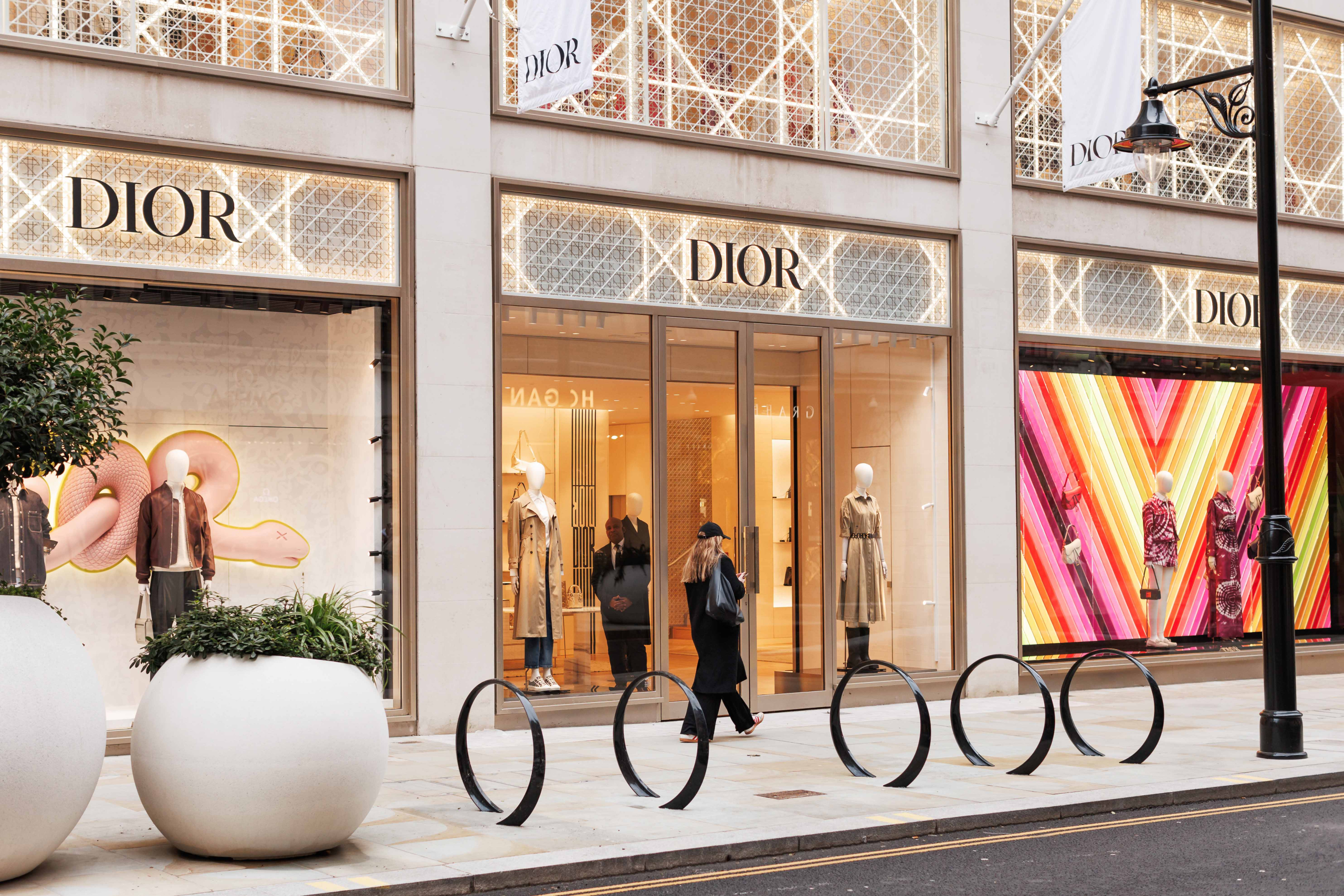
Sloane Street, London
Ecologically considerate lighting takes a unique form to provide a luxury residential and retail experience, whilst reducing energy and the impact of light on our natural surroundings at night

Client
Cadogan
Location
Knightsbridge, London
Manufacturer
Urbis Schreder, Erco
Architect
John McAslan + Partners
Photography
Hufton + Crow
Sloane Street is one kilometre long and is the location for many prestigious luxury fashion stores in the UK, whilst being home to many residents. The entire street has undergone a complete refurbishment, including a new road, paving configuration, and new landscaping features. This project was completed in 2025.
LAPD illuminated the landscaped areas, roads, and pavements. The project involved developing a bespoke lighting column unique to Sloane Street, from preliminary sketch work to prototyped castings and a complete column mock-up.
The column, which consisted of steel components and cast iron embellishments, was the result of a collaboration between Cadogan, LAPD, Bethan Griffiths, a metalworking specialist, Topp & Co, a blacksmith, and lighting manufacturer Urbis Schreder. Public consultations provided initial direction for the column’s appearance.
In addition to creating this bespoke lighting column for Sloane Street, LAPD also significantly improved the lighting’s sustainable and ecological status. The previous columns used metal halide light sources with a colour temperature of 4000K. This delivered a cool white light with very little optical control, resulting in light spill into residential properties that was above the maximum light levels recommended by the Institute of Lighting Professionals.
Furthermore, the light’s colour temperature of 4000K and high percentage of blue light within its spectrum created a greater health risk to residents of the street.
To counter this effect, we specified a warmer colour temperature of 3,000K for the street lighting and 2,700K for the landscape lighting. This warmer light reduces the health impact of any spill light on residents and ensures that it causes significantly less disruption to the surrounding environment—particularly local, nocturnal pollinators critical to the planet’s ecosystem. Additionally, by enhancing the optical control of the street lights, we dramatically reduced the quantity of spill light into properties whilst improving the uniformity and lit effect on the street and pavements.
During our discussions with the council, we also agreed on a lower lighting classification for the street, given the significant residential presence. In doing so, the light levels were lowered by 30%. To further reduce the ecological impact, we have specified night-time dimming, reducing light levels when there is a lower requirement, and consequently reducing the energy consumption.
More Projects